
Washington Responds to Retreat from Canada (June 1776)
[The following are excerpts from General Washington’s letters to Brigadier-General Sullivan on the retreat from Canada. Washington encourages friendship with the Canadians and good relationships between officers. For further reading, please visit the Hathi Trust Digital Library to view The Writing of George Washington. This highlight is part of our ongoing Legacies of Liberty series, where we celebrate Washington and Lee’s Revolutionary founders.]
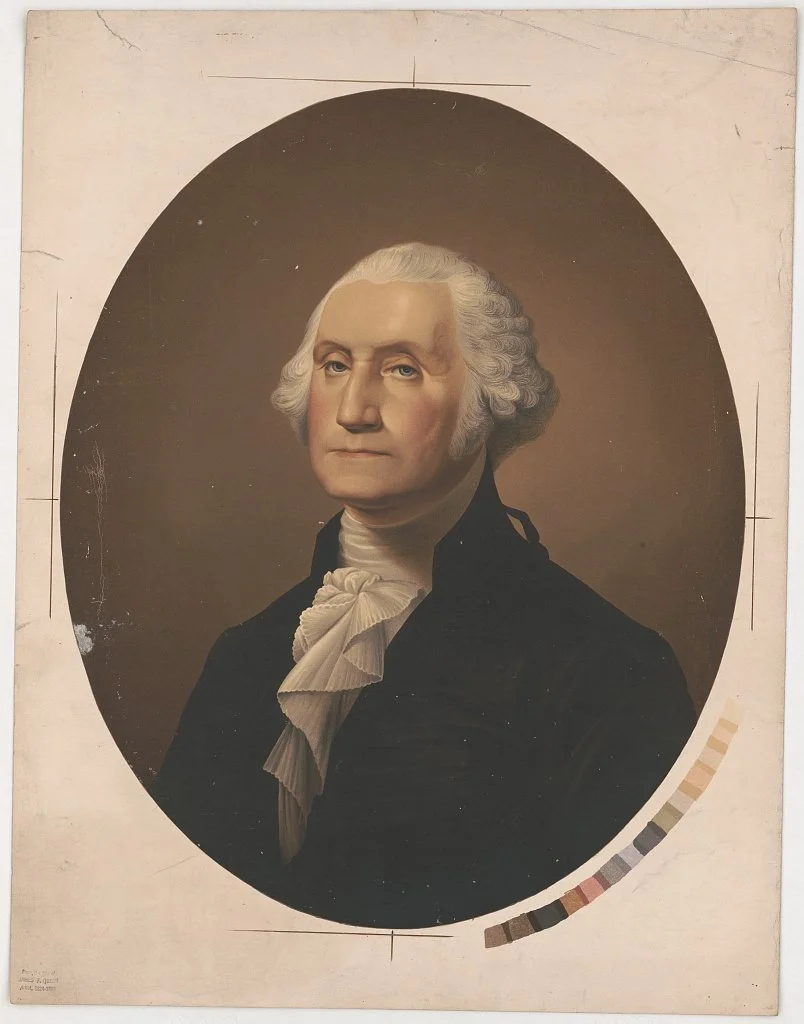
(General George Washington | Source: Library of Congress)
To Brigadier-General Sullivan
New York, 16 June 1776
Dear Sir,
I was favored with yours of the 5th and 6th instant by express yesterday evening from General Schuyler; and am exceedingly happy on account of the agreeable and interesting intelligence it contains. Before it came to hand, I almost dreaded to hear from Canada, as my advices seemed to promise nothing favorable, but rather our further misfortunes. But I am now hopeful that our affairs, from the confused, distracted, and almost forlorn state, in which you found them, will emerge and assume an aspect of order and success. I am convinced that many of our misfortunes are to be attributed to a want of discipline, and a proper regard to the conduct of the soldiery. Hence it was, and from our feeble efforts to protect the Canadians, that they had almost joined and taken part against us. As you are fully apprised of this, and conceive them well disposed towards us, with confidence I trust, you will take every step in your power to conciliate and secure their friendship. If this can be affected, & of which you seem to have no doubt, I see no objection to our indulging a hope that this country, of such importance in the present controversy, may yet be added to and complete our union. I confess this interesting work is now more difficult, than it would have been heretofore, had matters been properly conducted; but yet, I flatter myself it may be accomplished by a wise, prudent, and animated behavior in the officers and men engaged in it; especially if assisted by the friendly disposition of the inhabitants. I think ever mark of friendship and favor should be shown them, to encourage their zeal and attachment to our cause, and from which if they once heartily embark, we shall derive innumerable benefits.
Your conduct in pushing and securing posts low down the country is certainly judicious, and of the utmost advantage. The farther down we can take and maintain posts, the greater will our possession of the country be'; observing at the same time the necessity of having a safe retreat left, if you should be obliged to abandon them by a superior force. I am hopeful and shall anxiously wait to hear of General Thompson’s making a successful attack upon the party intrenching at the Three Rivers. Their defeat will be of the most essential services. It will chagrin them and disconcert their schemes on the one hand and animate our men and give life to our Canadian friends on the other, and efface from their minds the unfavorable impressions, our later conduct has made.
It will be of material consequence, in your advances down the country, to secure the several important posts as you go; at which, you may in case you should be obliged to decline the main object you have in view, make a vigorous and successful stand in your retreat. I concur with you in thinking it not of material moment to keep a very large number of men at Lachine or the upper posts. There should be no more than will be necessary to repel such attacks and attempts, as may be made by the savages, and the regular troops above you; allowing for such a number of disaffected Canadians as may join them. But then there should be a sufficient number for that purpose, as our further misfortunes there might be of the most injurious consequence. If they can be maintained, the disaffected above will dwindle away, and the insurrection promise nothing disastrous.
It is impossible for me at this distance and not acquainted with the situation of affairs as well as you, who are on the spot, to give any particular direction for your conduct and operations. I therefore have only to request, that you with your officers will in every instance pursue such measures, as the exigency of our affairs may seem to require, and as to you shall appear most likely to advance and promote the interest and happiness of your country. The return which you mention to have enclosed, was not in your letter; you probably through hurry forgot to put it in, or Genl. Schuyler may have omitted it when in his hands. I wrote you on the 13 Inst. on this subject and must again enjoin a particular attention to this party of your duty, it being of the utmost importance to be frequently certified of our whole strength and stores. In compliance with your request, I shall transmit a copy of your letter to Congress by tomorrow’s post. It will give them sensible pleasure and such as they had no good reason to expect, at least so soon.
I have enclosed you an extract of a letter from Genl. Ward. from the capture mentioned in it there is no reason to expect the other transports that sailed with her are not far off the coast.
In regard to your giving commissions, it is a measure that I can neither approve or disapprove, having no authority to act in this instance myself. The propriety of it, must depend upon the powers and practice of your predecessors in command. If they had none, it will be judged of most probably by the good or bad consequences it may produce. Congress from your letter will see you have exercised such a power, and when they write you, will either confirm or refuse it in all probability.
Lest you should conceive that I do not think Lachine or the Cedars posts of importance, and whose defense are not very material, I must then add, that I esteem them of much consequence but only mean that more men need not be employed than what will be equal to any probable attack than may be made against them.
I would observe before I have done that it is my most earnest request, that harmony, a good understanding, and a free communication of sentiments may prevail and be preserved between the general and field-officers, particularly the former. Nothing can produce greater benefits than this, nor tend more to promote your military operations; whereas history and observation sufficiently evince (they abound with numberless examples) the fatal consequences, which ever resulted from distrust, jealousy, and disagreement among officers of these ranks. Wishing therefore your counsels and efforts to be founded in a happy union, and to meet the smiles of a kind Providence, I am, dear Sir, &c.
P.S. Knowing your great zeal for the cause of your country, and desire to tender her every possible service, I must caution you not to put too much to the hazard in your exertions to establish her rights, and to receive with a proper degree of caution the professions the Canadians may make. They have the character of an ingenious, artful people, and very capable of finesse and cunning. Therefore, my advice is, that you put not too much in their power; but seem to trust them, rather than do it too far. I would also have you to keep all your posts, as you go, well secured, to guard against any treacherous conduct.